Modern Interior Design Trends in Armenia and Tajikistan: Blending Heritage with Contemporary Elegance
AidaStone
6min read
March 18, 2026
Introduction: The Architectural Renaissance of the Caucasus and Central Asia
Interior design in the modern architectural landscape of the Eurasian Economic Union (EAEU) is undergoing a profound transformation. In countries like Armenia and Tajikistan, interior spaces are no longer mere enclosures; they are living testaments to a rich cultural dialogue between ancient heritage and futuristic global minimalism. From the sun-drenched, stone-clad apartments of Yerevan overlooking Mount Ararat to the sophisticated, contemporary commercial hubs and residences of Dushanbe, designers are forging a unique aesthetic language.
For architects, interior designers, and property developers operating in this dynamic region, understanding these evolving trends is critical to creating spaces that resonate culturally while meeting the highest standards of luxury and functionality. At Aidastone, headquartered in Armenia, we witness firsthand how natural stone, raw textures, and bioclimatic design principles anchor these modern interiors. This comprehensive manual explores the leading interior design trends shaping Armenia and Tajikistan, offering deep insights into material selection, spatial planning, and regional craftsmanship.
Part I: The Philosophy of Material Authenticity – Returning to Earth
The cornerstone of modern interior design in both Armenia and Tajikistan is a decisive shift away from synthetic, mass-produced surfaces toward authentic, tactile, and local natural materials.
1. The Revival of Volcanic Tuff and High-Density Travertine
In Armenian interior architecture, the interior wall is increasingly treated as an extension of the rugged landscape.
- Volcanic Tuff Integration: Designers are utilizing muted tones of Armenia’s famous volcanic tuff (ranging from apricot and pink to deep ochre and charcoal) inside luxury residences and boutique hotels. When honed or bush-hammered, tuff introduces a velvety texture that absorbs light softly, creating an intimate, grounding atmosphere.
- Travertine as a Modern Canvas: High-density travertine—sourced directly from Caucasian quarries—is dominating contemporary living room feature walls, minimalist kitchen islands, and spa-like bathrooms. Its organic veining and warm palette provide a sophisticated backdrop that complements sleek, handleless cabinetry and matte-black metal fixtures.
2. Craftsmanship and Artisanal Stonework
In Tajikistan, interior design heavily reflects the deep traditions of Central Asian geometry, tilework, and stonemasonry. Modern Dushanbe apartments and cultural centers are integrating handcrafted stone reliefs, intricate mosaic inlays, and carved stone panels that pay homage to traditional Ganch (carved stucco) and brickwork, translated into durable, permanent natural stone installations.
Part II: Key Interior Design Trends in Armenia
Armenian interior architecture is characterized by a brilliant synthesis of European minimalist furniture, industrial accents, and traditional Caucasian stone and woodwork.
1. Biophilic Design and Indoor-Outdoor Continuity
Armenians have a deep cultural reverence for nature. Modern residential design in Yerevan and upscale suburban developments (such as in Vahagni residential district) emphasize seamless transitions between indoor living spaces and outdoor gardens or balconies.
- Floor Continuity: Utilizing the same stone finish (such as brushed travertine or flamed basalt) across the indoor living room threshold and out onto the terrace creates an illusion of boundless space.
- Living Greenery: Incorporating indoor vertical gardens, olive trees, and natural wood partition walls brings the external environment directly into the urban apartment.
2. The Minimalist-Brutalist Fusion
A growing trend among young Armenian architects is the “Warm Brutalism” movement.
- Exposed reinforced concrete ceilings are paired with polished concrete floors and balanced by warm, LED-backlit natural stone feature walls.
- This juxtaposition softens the coldness of industrial architecture, creating spaces that feel both avant-garde and deeply welcoming.
Part III: Key Interior Design Trends in Tajikistan
Tajikistan’s interior design narrative is rapidly evolving, driven by economic development, a booming construction sector in Dushanbe, and a desire to merge international luxury standards with national motifs.
1. Grandeur and Neo-Classical Elegance with a Modern Twist
Tajik clients often gravitate toward spacious, grand reception areas and formal dining rooms designed to host large family gatherings—a core cultural value.
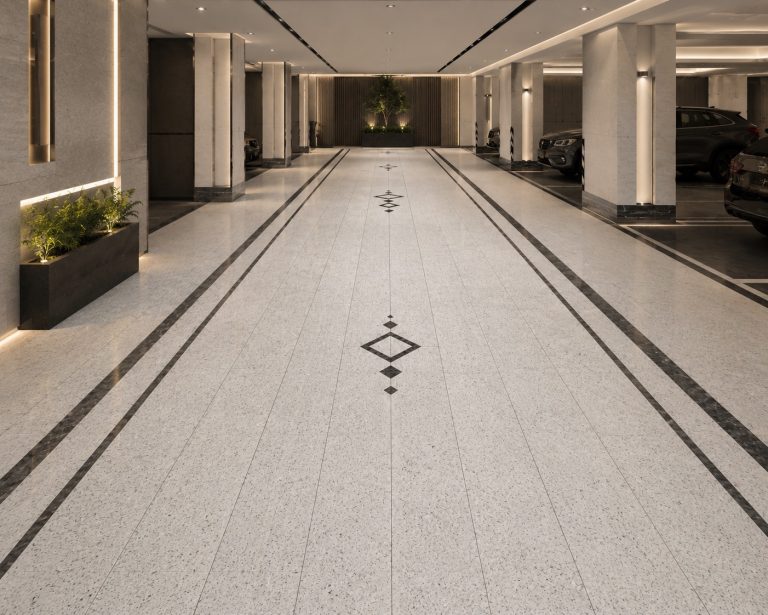
- Statement Flooring: Large-format book-matched marble or high-density travertine flooring with intricate waterjet-cut geometric borders inspired by ancient Persian and Sogdian motifs are highly sought after.
- Lighting and Height: High ceilings are accentuated by cascading crystal chandeliers paired with minimalist recessed linear lighting, striking a balance between traditional opulence and contemporary sleekness.
2. Multifunctional Spaces and Smart Living
With urban real estate in Dushanbe expanding upward, space optimization has become a priority. Modern Tajik interiors feature hidden storage walls clad in stone or wood veneers, multifunctional furniture, and integrated smart-home automation systems that control climate, lighting, and security discreetly behind clean architectural lines.
Technical Deep-Dive: Comprehensive Engineering & Design FAQ
Q1: How do designers balance the weight of natural stone in high-rise interior apartments in Yerevan and Dushanbe?
A: While full-slab stone cladding can be heavy, modern interior designers utilize thin-stone veneer technologies (slabs cut to 8mm to 10mm thickness reinforced with aluminum honeycomb or fiberglass mesh). This reduces the dead load by over 60%, making it entirely safe for drywall partitions and high-rise apartment interiors without compromising visual impact.
Q2: What lighting techniques work best with textured Armenian travertine and local stone interiors?
A: Textured stones (honed, brushed, or sandblasted) come alive with grazing light. Placing linear LED strips at the top or bottom of a stone wall, casting light at a 15-degree angle across the surface, highlights the natural porosity, veining, and micro-relief of the stone without creating harsh glare.
Q3: How are open-plan kitchens designed to withstand daily use while maintaining a luxurious aesthetic?
A: Designers are increasingly specifying honed granite or high-density travertine for kitchen islands. Unlike polished marble, which can etch from lemon juice or wine, properly sealed honed granite and high-density travertine offer superior resistance to staining and scratching, merging commercial-grade durability with high-end residential elegance.
Part IV: Color Palettes and Textural Layering
The color psychology of modern interiors in the Caucasus and Central Asia has shifted toward serene, earthy, and grounding tones.
1. The EAEU Earth Palette
- Base Tones: Warm beiges, travertine creams, soft taupes, and muted terracottas.
- Accent Tones: Deep forest green (inspired by Caucasian pine forests), midnight blue, and brushed brass or aged bronze hardware.
2. Tactile Contrast
The secret to a successful modern interior in Armenia and Tajikistan lies in tactile contrast:
- Pairing the cool, hard surface of a natural stone coffee table with the soft, textured weave of boucle or wool upholstery.
- Combining raw iron structural columns with warm, amber-toned oak flooring and smooth plaster walls.
Part V: Sustainable and Local Sourcing in Interior Design
Sustainability is no longer a niche concept in Eurasian architecture; it is a primary design driver.
- Reducing Carbon Footprint: Sourcing interior stones locally from Armenian quarries through Aidastone drastically reduces the embodied carbon associated with shipping heavy materials across continents.
- Durability as Sustainability: Natural stone does not off-gas volatile organic compounds (VOCs) like synthetic laminates or carpets, contributing to superior indoor air quality and ensuring a multi-decade design lifespan that eliminates repetitive renovation waste.
Conclusion: Crafting Timeless Interiors with Aidastone
Modern interior design in Armenia and Tajikistan represents a vibrant crossroads where ancient geological heritage meets contemporary sophistication. Whether you are designing a sleek penthouse in downtown Yerevan or a luxurious modern estate in Dushanbe, the choice of materials dictates the soul of the space.
At Aidastone, we provide the finest selection of Caucasian travertine, granites, and custom stone solutions designed to elevate interior architecture to new heights of beauty and durability.
Are you ready to transform your next interior design project? Contact the Aidastone team today. Let us help you select the perfect stone textures, provide technical fabrication details, and bring your contemporary Eurasian architectural vision to life.
SEO Meta-Data for Aidastone
- Focus Keyword: Modern Interior Design Armenia Tajikistan
- Secondary Keywords: Caucasian interior stone trends, Travertine interior design Yerevan, Dushanbe luxury apartments architecture, Aidastone interior solutions, Natural stone feature walls, Contemporary Caucasus design.
- Meta Description: Explore modern interior design trends in Armenia and Tajikistan. Discover how architects blend ancient heritage with contemporary minimalism using natural stone, warm textures, and sustainable materials by Aidastone.